Most holiday chocolate content either ignores skin benefits entirely or overstates them with buzzword soup. This does neither.
What follows are four recipes assessed honestly for their skin-relevant ingredients — with real quantities, real brand names, and a clear note wherever the evidence runs thin. Not medical or dermatological advice; just specifics that most recipe posts refuse to give you.
Why Cacao and Dark Chocolate Matter for Skin Health
The Flavanol Science Without the Marketing Layer
Cacao is one of the richest dietary sources of flavanols — specifically epicatechin and catechin, the same antioxidant compounds found in green tea. A 2006 study published in the Journal of Nutrition gave participants 326mg of cocoa flavanols daily for 12 weeks. Researchers recorded measurable improvements in skin hydration, reduced surface roughness, and improved UV protection capacity. That is not a miracle result. It is a modest, documented benefit from a consistent daily dose over three months.
326mg of flavanols translates to roughly 20–25g of high-flavanol dark chocolate per day. Or about 2 tablespoons of minimally processed cacao powder.
The catch: most chocolate products do not disclose flavanol content. You are buying based on cocoa percentage and processing method, then guessing the rest.
Which Chocolate Actually Contains These Compounds
Processing temperature and alkalization destroy flavanols — not the chocolate format itself. Here is what that means when you are standing in the baking aisle:
- Raw cacao powder (cold-pressed, unalkalized) retains the highest flavanol content. Anthony’s Organic Cacao Powder (~$14 for 2lbs on Amazon) and Navitas Organics Cacao Powder (~$12 for 8oz) are both reliably minimally processed options with transparent sourcing.
- Natural (non-alkalized) cocoa powder loses some flavanols through heat but keeps significantly more than its Dutch-process counterpart. Ghirardelli Premium Baking Cocoa (~$8 for 10oz) uses natural processing. So does Bob’s Red Mill Organic Cocoa Powder.
- 70%+ dark chocolate bars vary widely by brand and origin. Valrhona Manjari 64%, Lindt Excellence 90% Dark, and Green & Black’s Organic Dark 70% are mid-to-high tier for flavanol preservation. Lindt 90% delivers roughly 1.8mg zinc and 0.9mg copper per 30g serving alongside the antioxidant load.
Dutch-processed cocoa — most Hershey’s powder, generic store-brand baking cocoa — loses up to 90% of its flavanol content through alkalization. The product is pH-stable, has a smoother flavor, and works well in cakes. Your skin gets nothing from it. Know what you are optimizing for before you buy.
Topical Use vs. Eating It — Where the Evidence Actually Sits
Dietary flavanol intake has solid research behind it. Topical cacao application does not, at least not at the same depth. There is evidence for cocoa butter’s moisturizing effect — it works — but Palmer’s Cocoa Butter Formula ($7 for 350ml) accomplishes the same thing without the mess of smearing raw cacao on your face.
The face mask recipe later works as a short-term hydration and mild exfoliation treatment. It is a spa-quality sensory experience with a side of antioxidants. It will not replace a vitamin C serum or a well-formulated retinol. Manage expectations accordingly, and the recipe becomes genuinely enjoyable rather than disappointing.
Dark Chocolate vs. Milk Chocolate vs. Raw Cacao: What You Are Actually Paying For
Before choosing ingredients, understand the real differences — not just cocoa percentage.
| Type | Cocoa Solids | Flavanol Level | Best Use | Approx. Cost per 100g |
|---|---|---|---|---|
| Raw Cacao Powder | 100% | High (unprocessed) | Hot cocoa, smoothies, face masks | $4–$9 |
| Natural Cocoa Powder | 100% | Medium-High | Baking, truffle coating, bark dust | $2–$4 |
| Dutch-Process Cocoa | 100% | Very Low (alkalized) | Flavor-only baking | $2–$3 |
| 70–90% Dark Chocolate | 70–90% | Medium-High | Bark, ganaches, truffles | $4–$12 |
| Milk Chocolate | 10–35% | Negligible | Flavor only | $2–$5 |
Bottom Line on Which to Buy
For skin-conscious holiday recipes, use Anthony’s Organic Cacao Powder or Navitas Organics for hot drinks and masks. Use Lindt Excellence 90% or Valrhona Manjari 64% for anything requiring melted chocolate. The cost difference between natural and Dutch-process cocoa over a month of cooking is $2–4. Spend it — you are not saving money by choosing the product that delivers nothing useful.
A Note on White Chocolate
White chocolate contains zero cacao solids. It is cocoa butter combined with sugar and milk solids. There are no flavanols, no polyphenols, no mineral content worth noting. Use it for decoration. Do not build a recipe around it hoping for skin benefits — there are none.
Four Festive Chocolate Recipes Worth Making This December
These use skin-relevant ingredients at doses that actually matter. No “a pinch of superfood” tokenism.
1. Cacao Hot Cocoa with Ashwagandha (Serves 2)
Heat 2 cups oat milk or full-fat coconut milk to just below a simmer in a small saucepan. Whisk in 4 tablespoons Anthony’s Organic Cacao Powder, 1 teaspoon raw honey, ½ teaspoon cinnamon, ¼ teaspoon ashwagandha powder, and a pinch of sea salt. Serve immediately. Add a pinch of cayenne if you want to support circulation.
Ashwagandha at 300–600mg daily has clinical evidence for reducing cortisol — relevant because elevated cortisol directly drives inflammatory breakouts and disrupts skin barrier repair overnight. Each cup here delivers roughly 300mg, sitting at the lower end of studied effective doses. The flavor is earthy and blends cleanly with cacao. This is the recipe you keep making in January, February, and beyond.
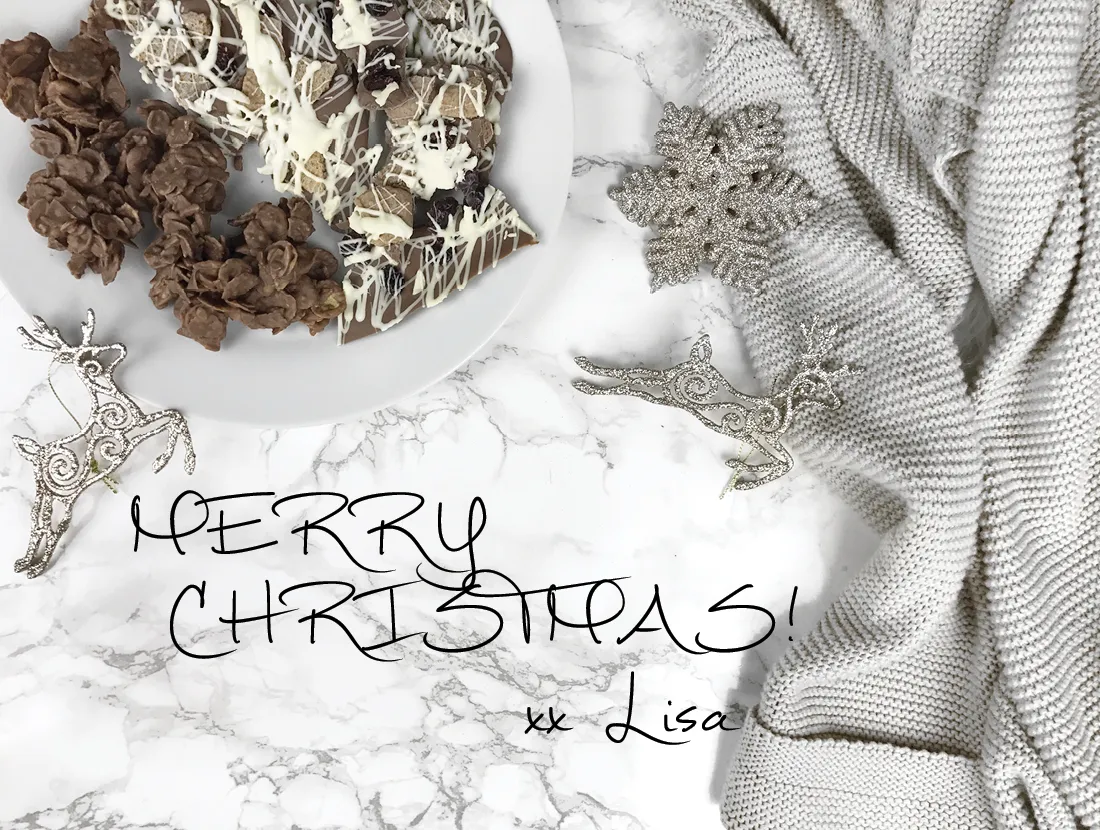
2. Dark Chocolate Christmas Bark (Makes ~20 Pieces)
Melt 200g of Valrhona Manjari 64% or Lindt Excellence 85% using a double boiler — no water contact with the bowl. Spread to 3–4mm thickness on a parchment-lined baking sheet. Top immediately with 2 tablespoons freeze-dried raspberries, 1 tablespoon roughly chopped pistachios, 1 teaspoon flaked sea salt, and dried rose petals if available. Refrigerate 20 minutes until fully set. Break into irregular pieces.
Cost per batch: $8–12 depending on chocolate brand. Shelf life: 2–3 weeks at room temperature below 18°C (64°F). Freeze-dried raspberries contribute vitamin C, which supports collagen synthesis. Pistachios add vitamin E and healthy fats. The bark looks expensive, travels well as a gift, and the flavanol content from 200g of 64–85% dark chocolate is genuinely meaningful. This is one of the better-value homemade gifts in existence.
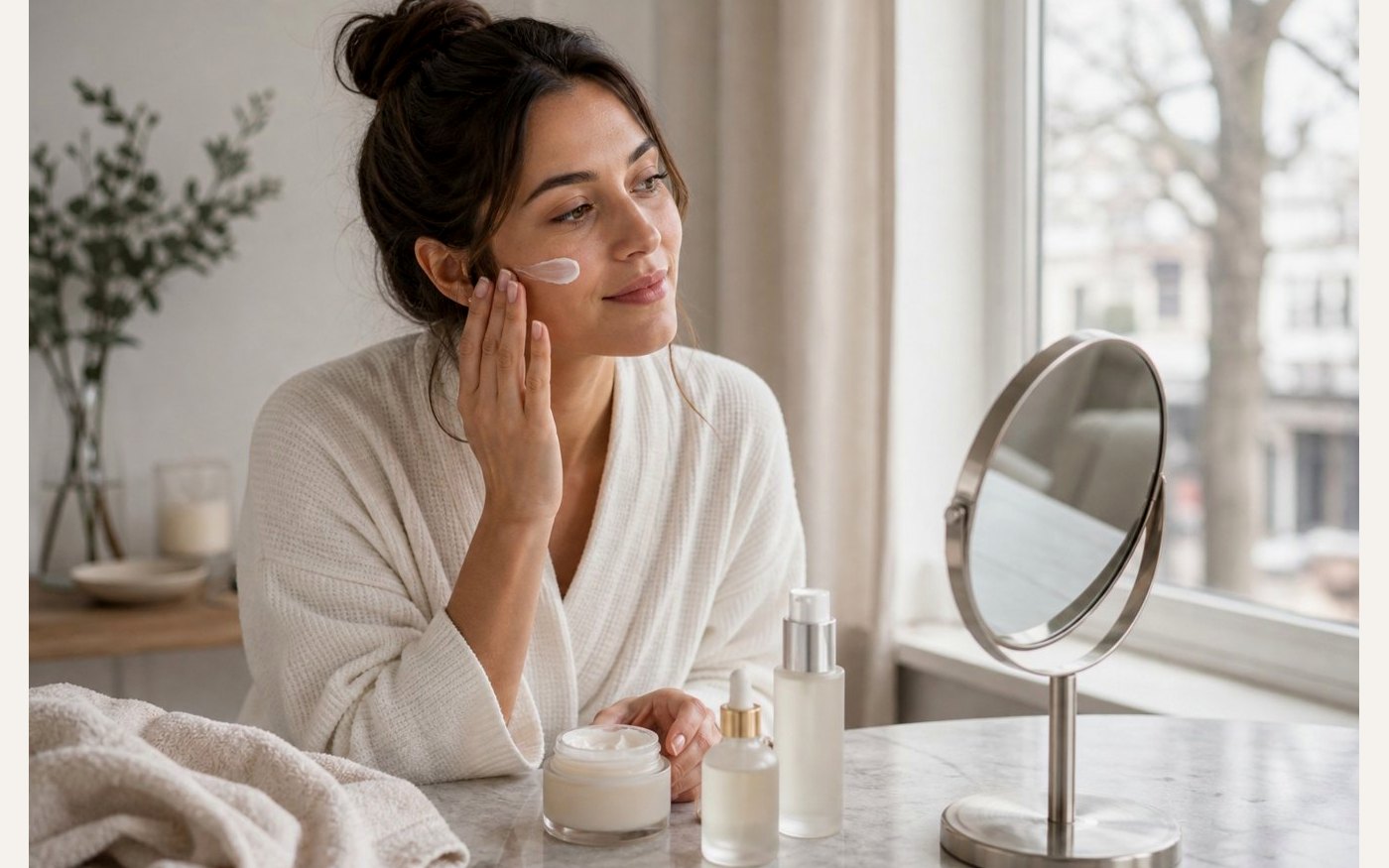
3. Cacao and Manuka Honey Face Mask (Single Use)
Mix together: 1 tablespoon Ghirardelli Natural Cocoa Powder or Anthony’s Cacao, 1 tablespoon raw Manuka honey (Comvita UMF 10+, ~$28 for 250g), 1 teaspoon plain full-fat yogurt, and ½ teaspoon rosehip oil. The Ordinary 100% Organic Cold-Pressed Rosehip Seed Oil (~$10 for 30ml) is the obvious pick here — it is effective, cheap, and widely available.
Apply to clean dry skin. Leave 12–15 minutes. Rinse with warm water.
The Manuka honey is not optional — its antimicrobial compounds (methylglyoxal, or MGO) are what differentiate it from supermarket clover honey. Comvita UMF 10+ is the minimum effective grade. UMF 5 products do not have the same documented antibacterial activity. If you have acne-prone skin, skip the yogurt and substitute ½ teaspoon aloe vera gel to avoid potential pore congestion from dairy. Patch test before full application regardless.
4. Rose and Cardamom Dark Chocolate Truffles (Makes 20–24)
For the ganache: heat 150ml double cream until just simmering, then pour over 200g finely chopped Green & Black’s Organic Dark 70%. Add 1 tablespoon unsalted butter, 1 teaspoon culinary rose water, and ½ teaspoon ground cardamom. Stir from center outward until the mixture is glossy and smooth. Refrigerate a minimum of 3 hours.
Roll into 15g balls using cold hands or a melon baller. Coat in a mixture of 3 tablespoons Ghirardelli Natural Cocoa Powder and 1 tablespoon finely ground dried rose petals. Refrigerate immediately. These keep 5–7 days refrigerated, up to 1 month frozen. Cost per batch is under $15. They photograph beautifully and scale easily — double the recipe for larger gift batches without any technique changes.
Three Mistakes That Silently Ruin Chocolate Recipes
Why Does Melted Chocolate Seize Into a Clump?
A small amount of water contacting melted chocolate causes the cocoa particles to bind together into a grainy, stiff mass — the opposite of smooth ganache. If it happens, add boiling water one teaspoon at a time while stirring continuously. You convert it into a thick, workable sauce. It will not temper for bark or dipping at that point, but it is perfectly usable for truffles or as a warm sauce over dessert. Prevention is simpler: dry every bowl, spoon, and spatula completely before beginning.
Can You Swap Raw Cacao for Regular Cocoa Powder?
In hot drinks, smoothies, and face masks: direct 1:1 swap. In baked recipes: start with 20% less raw cacao and add a small amount of extra sweetener, since raw cacao is more bitter and denser than processed cocoa. The flavor is noticeably more complex and slightly fruity. Most people find it better once they adjust. The skin-benefit difference between natural cocoa and raw cacao is real but incremental — if budget is a constraint, Ghirardelli Natural Cocoa is still a solid ingredient.
How Long Do Homemade Chocolate Gifts Actually Last?
- Chocolate bark: 2–3 weeks at room temperature below 18°C / 64°F — store away from light
- Ganache truffles: 5–7 days refrigerated; up to 1 month frozen in an airtight container
- Dry hot cocoa mix (pre-batched cacao, spices, ashwagandha): 3 months in a sealed glass jar
- Face mask: Make it fresh each time. No added preservatives means it should not be stored.
Label every homemade gift with a best-before date. Leaving the date off is how you end up fielding a December 29th message asking whether truffles are still safe. They probably are. But the question is avoidable.
When Buying Beats Making
If you are gifting more than ten people, the math stops working in your favor. Compartés chocolate bars ($10–12 each), Vosges Haut-Chocolat flavored bars ($8–15), or a Mast Brothers holiday gift set ($25–40) all become competitive once you factor in your time honestly. The bark recipe makes sense for four to six recipients. Beyond that, buy premium and spend the hours differently.
The Recipe Worth Keeping After Christmas
The cacao hot cocoa with ashwagandha. Not because it is the flashiest recipe here — the truffles win that — but because it is the only one you can sustain as a daily habit past December 26th.
Two tablespoons of Anthony’s Organic Cacao powder per cup, consumed daily, delivers a consistent flavanol dose that compounds over weeks and months. Combined with the cortisol-modulating effect of ashwagandha, it builds a foundation that a single holiday face mask never can. The research on dietary flavanols and skin is incremental — small improvements in hydration and elasticity over time, not dramatic before-and-after results. But small improvements repeated daily for three months beat a one-time seasonal ritual every time.
Bark and truffles are gifts. The morning cacao ritual is the actual skin investment. Both have a place in December. Only one has a place in March.
Buy a 2lb bag of Anthony’s Organic Cacao (~$14), a tin of Comvita UMF 10+ Manuka honey (~$28), and a 60-serving bottle of organic ashwagandha powder (~$12). That is a full month of daily cups and two batches of face masks for under $55 total. Compare that to a single mid-range facial serum. The math is reasonable.